
Panic Attacks at Night: Why You Wake Up Terrified and What Helps
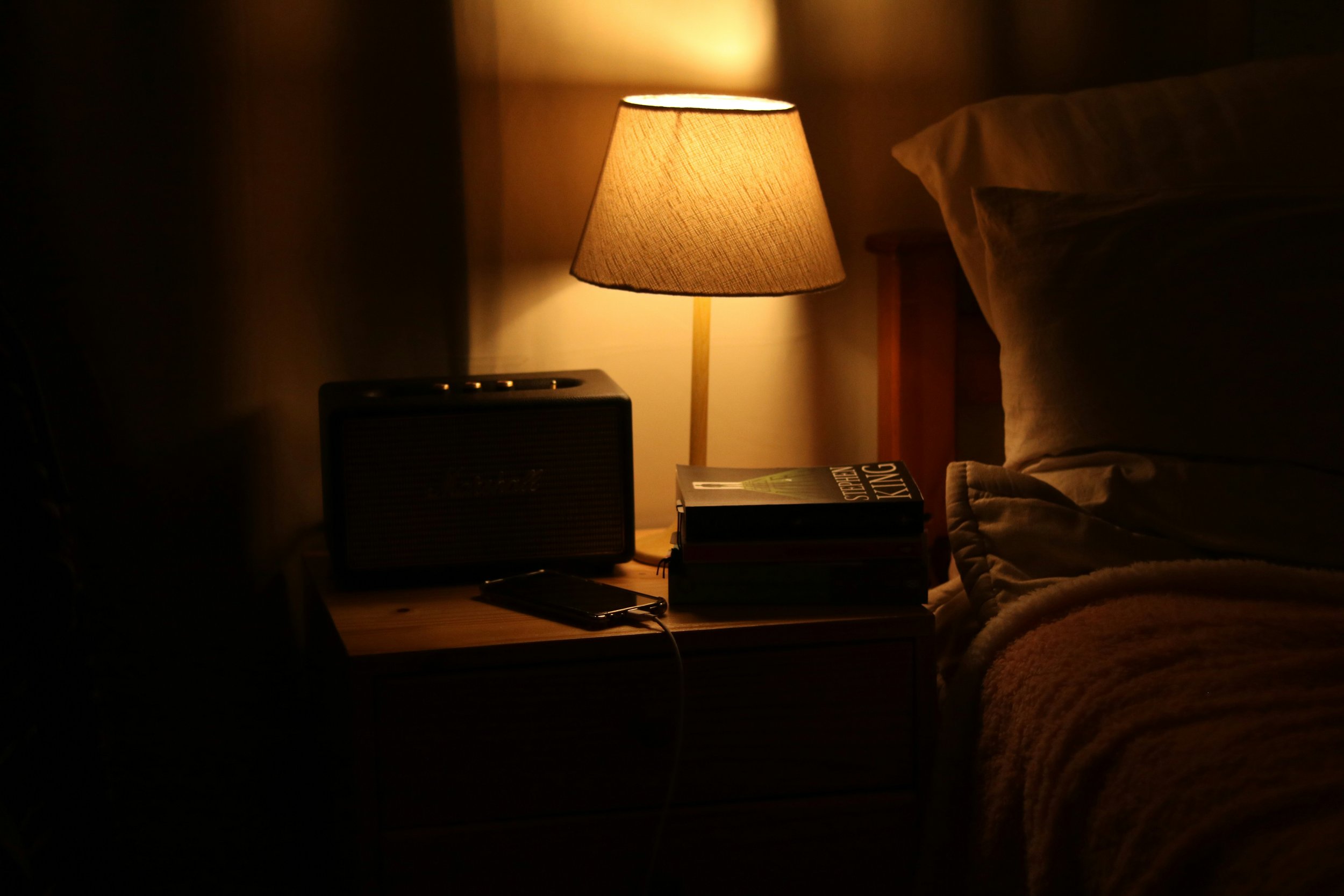
A panic attack in the middle of the night rarely feels like anxiety at first. It feels physical. You are asleep, then suddenly you are awake with your heart pounding hard enough that you can feel it in your chest or throat. Your breathing feels off. You may be sweating, shaky, lightheaded, nauseated, or convinced that something serious is happening.
At 2:00 or 3:00 in the morning, there is not much context to help you make sense of it. You were not walking into a difficult meeting or reading a stressful email. You were asleep. That is part of what makes nighttime panic so unsettling. The body seems to have reached a conclusion before your mind knows what the question is.
The National Institute of Mental Health estimates that 2.7% of U.S. adults experience panic disorder in a given year, and 44.8% of adults with panic disorder have serious impairment. Cleveland Clinic reports that as many as 7 in 10 people with panic disorder experience nocturnal panic attacks. Sleep problems are common more broadly too. In a 2026 report using 2024 National Health Interview Survey data, the CDC found that 18.1% of adults had trouble staying asleep most days or every day.
Those numbers are useful context, but they cannot tell you why you woke up with a racing heart last night. Panic is one possibility. Sleep apnea, heart rhythm problems, thyroid conditions, asthma, medication effects, alcohol, nightmares, and other medical or sleep-related problems can cause some of the same sensations. If an episode is new, severe, clearly different from your usual pattern, or includes concerning chest pain, fainting, significant breathing difficulty, weakness, or other urgent symptoms, get medical care.
If you have already been evaluated and the same rush of fear keeps happening, then the problem becomes easier to define. The question is no longer only, What was that? It is also, Why am I now thinking about it every night before I go to bed?
Why Panic Attacks Can Happen During Sleep
A nighttime panic attack, sometimes called a nocturnal panic attack, wakes you from sleep with a sudden surge of fear and physical symptoms. You do not have to be lying awake worrying beforehand. You may have fallen asleep quickly and felt completely fine.
That can make the anxiety explanation hard to accept. People often say some version of, How could this be anxiety if I was asleep?
Panic does not always start with a conscious thought. Sometimes the body sensation comes first. Sleep involves normal shifts in heart rate, breathing, temperature, muscle tone, dreams, and arousal. Most of us move through those changes without noticing them. If you wake during one and your attention lands on a strong heartbeat or a strange breath, the sensation can become the focus almost immediately.
You notice your heart. Then you listen for the next beat. You wonder whether it is too fast. You try to take a deeper breath to test whether you can. Now you are monitoring two things instead of one. Fear adds adrenaline, the heartbeat becomes more noticeable, and the whole experience starts to feel like evidence that your first fear was correct.
Mayo Clinic notes that nighttime panic can include a rapid heart rate, sweating, trembling, heavy breathing or shortness of breath, chills or flushing, lightheadedness, and a sense of impending doom. Cleveland Clinic says the symptoms usually peak in less than 10 minutes.
The intense part may be short. The rest of the night may not be. You are still awake, listening to your breathing, noticing every change in your chest, deciding whether it is safe to lie back down. You check the time and realize you have work in four hours. Now the panic attack has ended, but sleep has become another problem.
Stress can make these episodes more likely without making someone look obviously anxious during the day. In Washington, DC, that may be a federal employee following another round of agency changes, an attorney who has been operating on deadlines for weeks, a physician finishing notes after dinner, or a parent handling the last round of household logistics at 10:30 p.m. People can remain highly functional while carrying more strain than they realize.
Caffeine, alcohol, illness, medication changes, grief, trauma reminders, several nights of poor sleep, and major life changes can complicate the picture. Sometimes there is an obvious pattern. Sometimes there is not.
Panic Attack, Heart Problem, Sleep Apnea, or Night Terror?
This is the part people understandably want a clear answer to. Unfortunately, symptoms alone do not always give one.
Panic can cause a racing heart, chest discomfort, sweating, nausea, dizziness, trembling, shortness of breath, tingling, and a strong sense that something is very wrong. Some of those symptoms also occur with cardiac problems. There is no responsible article-level trick for ruling out a heart attack at home.
The American Heart Association advises taking chest pressure, squeezing, fullness, or pain seriously, particularly when it occurs with shortness of breath, sweating, nausea, lightheadedness, or discomfort in the arms, back, neck, jaw, or stomach. If an episode is new, severe, or different from your established panic pattern, seek medical help rather than trying to convince yourself it is anxiety.
Sleep apnea can also cause abrupt awakenings that feel frightening. The National Heart, Lung, and Blood Institute lists loud snoring, breathing that starts and stops, gasping for air, daytime sleepiness, dry mouth, headaches, and insomnia among common symptoms. If someone has noticed pauses in your breathing, or you repeatedly wake choking or gasping, a sleep evaluation may be appropriate.
Night terrors are different in a more basic way. A person may sit up, shout, move around, or look frightened while still partly asleep and remember little in the morning. With nocturnal panic, you usually wake fully and remember the fear, the physical sensations, and what you did afterward.
What to Do When Panic Wakes You Up
If this is the first episode, or the symptoms are medically concerning, get the appropriate medical assessment. Grounding techniques are useful for panic. They are not a substitute for evaluating new chest pain, severe breathing problems, fainting, or other concerning symptoms.
If this is a familiar pattern that has already been evaluated, start with something simple: get oriented. Sit up if that feels more comfortable. Put your feet on the floor. Look around the room instead of closing your eyes and checking your body from the inside. Notice the time, where you are, and a few ordinary details around you.
Breathing can help, but it does not need to become an exercise you perform perfectly. Repeated huge breaths can make tingling and lightheadedness worse. Breathe comfortably and let the exhale run a little longer. Relax one thing if you can: your jaw, your hands, your shoulders. You do not need to make your whole body calm down at once.
Try to postpone the investigation. After a familiar panic pattern has been medically evaluated, repeated symptom searches usually create more possibilities to worry about. The same goes for checking your pulse, smartwatch, blood pressure, or oxygen level every few minutes. A normal reading may reassure you briefly, then make you want another reading when the next sensation arrives.
And if you are still awake after the panic passes, being awake is not an emergency. Keep the room dim. Read something unremarkable. Sit somewhere comfortable for a while if the bed has become too activating. The more urgently you try to make sleep happen, the more closely you tend to monitor whether it is happening.
The next day is a better time to look for patterns. Was there more caffeine than usual? Alcohol? A medication change? Illness? Several poor nights of sleep? A difficult conversation? A week when work followed you home every night? Sometimes the answer is obvious. Sometimes it is not. You can still change how you respond even when you cannot identify a perfect cause.
The Panic Attack May End Before the Fear Does
After a few episodes, bedtime often starts to change. You stay up later because being awake feels safer. You leave the television on. You sleep propped up. You check your heart rate before bed. You avoid sleeping alone or stop looking forward to travel because hotel rooms suddenly feel risky. None of these responses is strange after a frightening experience. The problem is what happens when they become requirements.
If checking your pulse is what finally lets you lie down, checking starts to feel necessary. If your partner has to tell you that you are okay, their reassurance becomes part of getting through the night. If the television has to stay on until you fall asleep, quiet begins to feel less safe than it used to.
The immediate relief is real. It is also short. By the next night, your mind has a new set of things it believes it needs before sleep is safe.
This is one reason effective panic treatment is not simply a collection of calming techniques. The National Institute of Mental Health identifies cognitive behavioral therapy as a well-studied treatment for panic disorder. CBT looks at the relationship between physical sensations, the meaning you give those sensations, where your attention goes, what you avoid, and what you do to feel safe.
If a faster heartbeat always leads to checking, reassurance, and getting out of bed, treatment can work on that sequence. Interoceptive exposure may also be used when ordinary body sensations have become frightening in themselves. The purpose is not to prove that every physical sensation is harmless. It is to stop treating every familiar sensation as an emergency before you have enough information to do so.
The rest of the picture matters. Panic that sits inside health anxiety may need different work from panic that began after trauma. OCD can add checking and reassurance rituals. Grief may be quiet during a packed workday and much harder to ignore at night. Burnout can leave someone exhausted but still unable to power down. A useful treatment plan needs to account for what is actually happening in your life rather than assuming every panic attack has the same cause.
When Therapy Can Help
One nighttime panic attack does not automatically mean you need therapy. A more useful question is whether panic is starting to make decisions for you.
You may notice that you are thinking about bedtime by late afternoon. You stop traveling because sleeping somewhere unfamiliar feels risky. You are exhausted at work because you spend hours waiting for your body to do something strange again. You have had appropriate medical evaluations but still feel pulled toward one more check, one more search, one more reassurance that everything is okay.
At North Star Psychological Services, anxiety therapy in Washington, DC can include work on panic, health anxiety, body checking, overthinking, avoidance, and fear around sleep. CBT for anxiety may be especially useful when panic has become a repeating cycle of physical sensations, catastrophic interpretations, checking, and short-lived reassurance.
For many DC professionals, the circumstances around the panic are part of the work too. If you are waking at night after months of staying online late, following federal uncertainty, preparing for trial, carrying a demanding caseload, or trying to stay available to everyone, the conversation cannot end with breathing exercises. Workload, boundaries, perfectionism, and difficulty stopping may be contributing to the larger pattern.
North Star offers in-person therapy near Dupont Circle along with virtual and hybrid options for clients in Washington, DC. If nighttime panic is beginning to affect your sleep, work, travel, or relationships, you can request a free consultation to talk through what has been happening.
Frequently Asked Questions About Panic Attacks at Night
Why do I wake up with my heart racing around 3 a.m.?
There is no special form of panic that switches on at 3 a.m., and there is not one mechanism that explains why everyone wakes at a particular hour. Sleep naturally includes brief awakenings and changes in heart rate, breathing, dreams, and arousal. If you wake during one of those shifts and become frightened by what you feel, panic can build quickly. After several episodes at a similar time, anticipation may make the pattern feel even more fixed. A new or persistent racing heart should still be discussed with a medical provider.
Can anxiety really wake you up from sleep?
Yes. A nocturnal panic attack can begin during sleep even when you were not consciously worrying beforehand. The first thing you notice may be a pounding heart, shortness of breath, heat, shaking, dizziness, or sudden dread. Anxiety is not the only reason people wake abruptly, which is why recurrent gasping, loud snoring, unusual heart rhythms, new chest pain, or other unexplained symptoms deserve medical assessment.
How long does a nighttime panic attack last?
The most intense part is usually brief. Cleveland Clinic says nocturnal panic symptoms typically peak in less than 10 minutes, while Mayo Clinic notes that nighttime panic attacks usually last only a few minutes. The recovery can take much longer. People may stay awake checking symptoms, waiting for their heart rate to settle, or worrying that another attack will begin as soon as they fall asleep.
Why am I suddenly afraid to go back to sleep?
Because the brain learns quickly from frightening experiences. If you woke from sleep convinced that you were in danger, bedtime may stop feeling neutral. Staying awake later, checking your heart, sleeping upright, keeping the television on, or making sure someone is nearby can lower fear in the short term. Over time, those habits may strengthen the idea that sleep requires special precautions. Therapy can help you reduce those accommodations without pretending the fear is not real.
Can trauma cause panic attacks at night?
Trauma can contribute, but nighttime panic is not automatically a trauma symptom. Trauma may increase hypervigilance, nightmares, startle responses, dissociation, or the feeling that letting your guard down is unsafe. Some people notice that nighttime becomes harder because there are fewer distractions and less control. If trauma symptoms are present alongside panic, treatment may need to address both rather than treating the panic as an isolated problem.
What type of therapy helps panic attacks?
CBT is one of the best-studied treatments for panic disorder. Panic-focused CBT can help with catastrophic interpretations of physical sensations, body monitoring, avoidance, and reassurance seeking. Interoceptive exposure is often useful when the sensations themselves have become frightening. Treatment may need to be adapted when panic occurs alongside OCD, trauma, depression, grief, health anxiety, substance use, or severe work stress.
Sleep Should Not Become Something You Have to Supervise
After enough nighttime panic, bedtime can start to feel like a test. You notice the clock, your breathing, the position of your body, whether your heart feels normal. You are trying to prevent a repeat of something that scared you.
The aim is not to become perfectly calm before bed. It is to know when a symptom needs medical attention, recognize a familiar panic pattern when that is what is happening, and recover without adding another hour of checking every time your body feels strange.
If panic attacks at night are starting to shape the way you sleep or live, you can contact North Star Psychological Services to ask about anxiety therapy in Washington, DC.
Related reading from North Star:
-
Why Am I Anxious for No Reason?
A good next read if the anxiety seems to come out of nowhere, especially when your body reacts before you know what you are anxious about. -
How to Stop Overthinking When Your Mind Will Not Shut Off
Helpful when the panic has passed but your mind keeps checking, replaying, researching symptoms, or trying to make absolutely sure you are okay. -
Nervous Breakdown Symptoms: Signs Stress Has Gone Too Far
For the bigger picture when panic is showing up alongside poor sleep, exhaustion, irritability, or the feeling that you have been pushing through for too long. -
How to Recover From Burnout When Rest Is Not Enough
Worth reading if you are exhausted but still cannot switch off, especially when work stress follows you into the evening and makes it difficult to settle. -
Anxiety Therapy in Washington, DC
If nighttime panic is starting to shape your sleep or your day, learn more about anxiety therapy at North Star near Dupont Circle.