
When Panic Attacks Keep Happening: 9 Signs It May Be Panic Disorder
Panic disorder is not especially rare. The National Institute of Mental Health estimates that 2.7% of U.S. adults experience it in a given year, and 44.8% of adults with panic disorder in the national survey behind that estimate had serious impairment. The survey data were collected between 2001 and 2003, so these are longstanding federal estimates rather than a snapshot of Americans today.
We do have newer information about the broader anxiety picture. In the American Psychiatric Association's 2026 Healthy Minds Poll, 48% of U.S. adults said they felt more anxious than they had the year before. Current events and paying bills or expenses were the two most common sources of anxiety, each cited by 62% of respondents.
Those figures tell us anxiety is widespread. They do not tell you what it feels like when your own body suddenly becomes the thing you are afraid of.
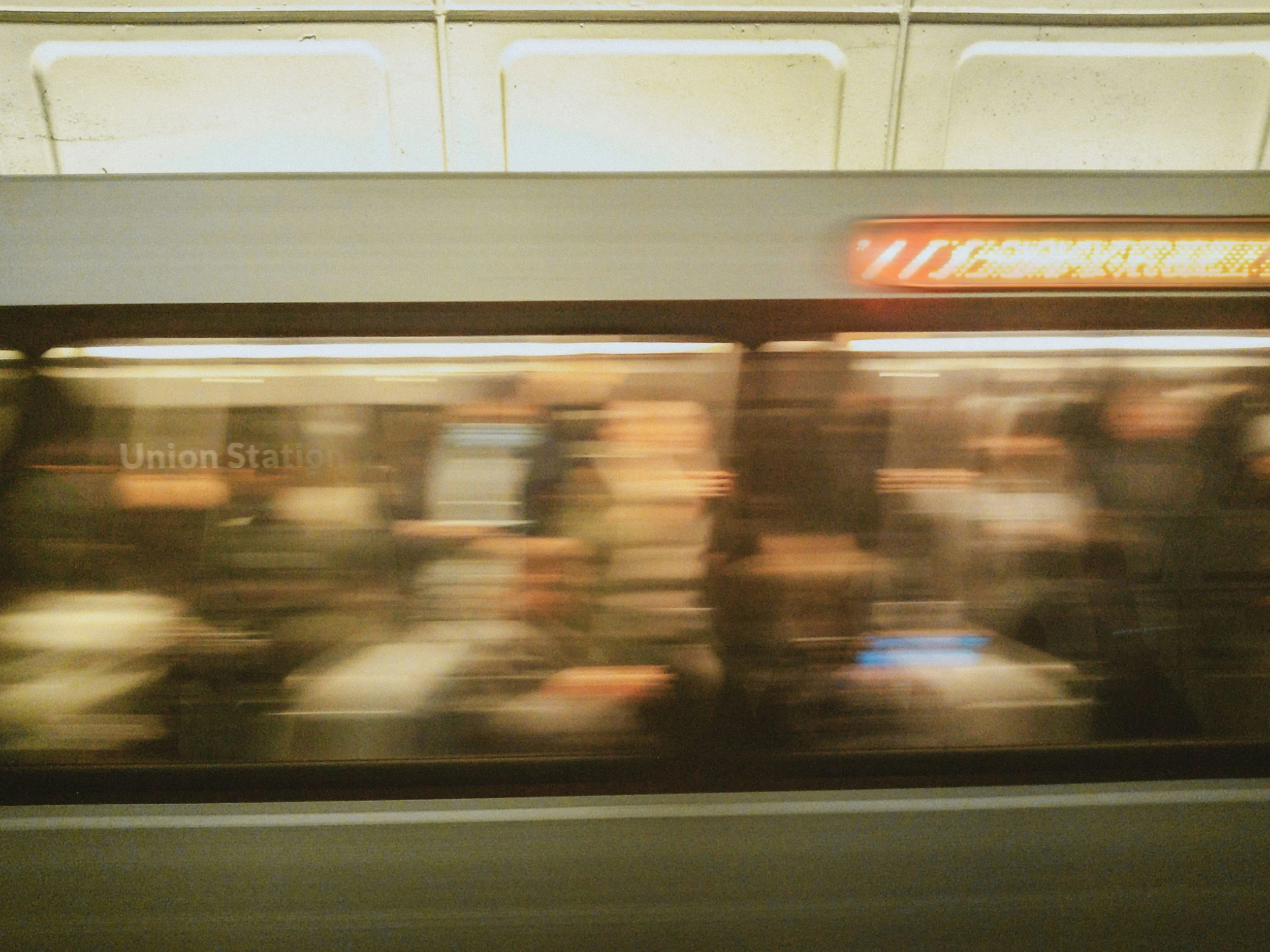
A panic attack may begin while you are doing something completely ordinary. You are on the Red Line heading toward Metro Center. You are halfway through a meeting. You have just sat down for dinner. You are lying in bed and trying to fall asleep.
Your heart speeds up. Your breathing feels wrong. Your chest tightens. Maybe you become lightheaded or suddenly too aware of the room around you. Within seconds, your attention narrows. You stop thinking about the meeting, the train, or whatever you were doing and start trying to figure out what is happening inside your body.
Then, eventually, it passes.
For some people, that is the end of it. For others, something lingers.
The next time you get on the train, you remember. You notice your heartbeat earlier. At dinner, you choose the chair with the easiest path to the door. You hesitate before going to the gym because you know exercise will make your heart pound. A few days later, you catch yourself checking whether you feel dizzy.
This is often where repeated panic attacks become something larger than a series of bad episodes. The attack itself may last minutes. The adjustments that follow can work their way into the rest of the day.
What changes when panic becomes panic disorder?
A panic attack is a sudden surge of intense fear or discomfort accompanied by physical and emotional symptoms. A racing heart, trembling, sweating, nausea, dizziness, chest discomfort, shortness of breath, tingling, chills, and feelings of unreality can all occur during an attack. Mayo Clinic provides a fuller description of panic attack symptoms here.
Panic disorder is not simply a more severe panic attack.
The pattern matters.
The National Institute of Mental Health describes panic disorder as recurrent, unexpected panic attacks followed by ongoing concern about future attacks or changes in behavior because of them. NIMH also makes an important distinction: an isolated panic attack is not, by itself, a mental disorder.
That is why a clinician is likely to ask what has happened since the attacks began.
Are you thinking about them frequently?
Are there places you no longer go?
Are you monitoring your body more closely?
Have you started arranging your day around how quickly you could get home, sit down, leave the room, or find help?
Often, the answer is not one dramatic change. It is ten small ones.
9 signs your panic attacks may be becoming panic disorder
1. The attacks keep happening, including when you cannot identify an obvious reason.
One panic attack during an extraordinarily stressful week may make sense afterward. A third attack while you are sitting at your desk can be harder to explain.
That unpredictability is unsettling. If you cannot identify what caused an attack, it becomes difficult to know what to avoid. Some people respond by becoming alert to almost everything instead: their heartbeat, breathing, surroundings, sleep, food, caffeine, schedule, or stress level.
Soon, the question is no longer only “Why did that happen?” It is “When will it happen again?”
2. You think about the next attack on days when you are not having one.
You may feel relatively calm and still be planning around panic.
Before a presentation, you wonder whether you can step out if necessary. Before a flight, you imagine what would happen if you felt trapped. Before taking Metro, you check how many stops you will be underground.
The amount of mental time this takes is easy to underestimate because much of it happens quietly. You may still be working, talking, parenting, or going about your day while another part of your attention stays on watch.
3. You avoid a place because you had an attack there.
Suppose your first severe panic attack happened in a crowded Metro car. The next morning, taking a rideshare feels sensible.
A week later, you do it again.
Soon the station itself begins to feel uncomfortable.
This can happen with elevators, bridges, restaurants, highways, airplanes, movie theaters, grocery stores, gyms, or anywhere else that has become associated with an attack. The connection does not have to make logical sense for it to feel compelling.
4. Physical sensations you barely noticed before now get your full attention.
You walk quickly up a flight of stairs and your heart pounds. You stand up too fast and feel lightheaded. You skipped lunch and your hands feel a little shaky.
Before panic entered your life, those sensations might have passed without much thought.
Now they can stop you in your tracks.
The problem is not that the sensation is imaginary. Your heart really is beating faster. You really do feel lightheaded. The fear comes from what your mind has learned to make of it.
5. You have developed rules that help you feel safer.
Maybe you always need an aisle seat. You prefer driving yourself because then you can leave whenever you want. You keep water in your bag. You avoid being somewhere without good cell service. You make sure someone knows where you are.
Many safety behaviors look completely ordinary from the outside, which is one reason they can grow without drawing much attention.
The question is not whether carrying water or choosing an aisle seat is inherently a problem. It is whether you feel unable to manage without it.
6. Medical reassurance does not settle the fear for very long.
Panic can produce symptoms that overlap with medical problems, so new, severe, or unfamiliar symptoms deserve appropriate medical evaluation.
But there is another pattern some people recognize.
The doctor says everything looks reassuring. You feel better that afternoon. Then your heart skips a beat two days later and the entire question reopens.
You check your pulse. Search symptoms. Compare what you are feeling to descriptions online. Perhaps you ask your partner, “Does this seem normal?”
The reassurance works. It just has an increasingly short shelf life.
7. You are still getting things done, but getting through them feels different.
Panic disorder does not always look like obvious impairment.
A Hill staffer can sit through a briefing while monitoring whether their hands are shaking. An attorney can finish an argument while wondering whether dizziness is about to start. A parent can handle pickup, homework, and dinner while counting the time until another adult gets home.
This is particularly easy to miss among people who are good at performing under pressure.
Other people see the performance. They do not necessarily see the calculation happening underneath it.
8. You are embarrassed by the attacks or by what you do when they happen.
Afterward, you replay the scene.
Why did I leave?
Did anyone notice?
Why couldn't I just stay there?
That embarrassment can make people reluctant to tell anyone what is happening. Sometimes they even minimize the attacks in therapy or at medical appointments because describing the full intensity feels uncomfortable.
There is no character test hidden inside a panic attack. People who are exceptionally composed in the rest of their lives can still find panic deeply disorienting.
9. You keep dropping things from your life.
At first, it is one crowded event.
Then the gym.
Then a trip you were already unsure about.
Maybe you stop taking Metro unless someone is with you. You turn down dinner because the restaurant is farther from home than you would like. You hesitate to take on a work assignment that involves travel.
Individually, every decision has an explanation.
Taken together, they can show you something else: panic has begun influencing the boundaries of your life.
Why can panic attacks feel so much like a medical emergency?
Because panic is physical.
That sounds obvious, but it is important. Telling someone that panic is “just anxiety” rarely helps when their chest is tight, their heart is hammering, and they cannot seem to get a satisfying breath.
Your body is doing something real. The nervous system has shifted into a high-alert state. The sensations can be intense enough that your mind begins trying to account for them immediately.
Is this my heart?
Am I going to faint?
Why can't I breathe normally?
What if I lose control here?
Those interpretations can add another layer of fear, which produces more physical arousal. Within a short period, the sensation and the interpretation of the sensation are feeding each other.
There is an important medical caveat here. Having panic attacks in the past does not mean every future symptom should automatically be attributed to anxiety. New or severe chest pain, fainting, significant difficulty breathing, neurological symptoms, or other concerning changes should be medically evaluated.
Once relevant medical problems have been ruled out or treated, however, repeatedly interpreting familiar panic sensations as signs of catastrophe can become one of the things that keeps the cycle alive.
The part of panic that is easy to miss: relief can reinforce the fear
This is one of the stranger things about panic disorder.
Something can make you feel better now and make panic harder later.
Go back to the Metro example. You have an attack on the train, get off at the next stop, and immediately begin to feel better.
Your brain notices the sequence.
Train. Panic. Escape. Relief.
The next morning, you take a car instead. Again, relief.
Nothing about this feels irrational. You are trying to avoid an experience that was awful.
But your nervous system does not necessarily learn, “I had a panic attack and it eventually passed.”
It may learn, “Getting out saved me.”
Now Metro feels more dangerous than it did before.
The same learning can develop around exercise. You notice your heart rate rising, become alarmed, and stop. A few minutes later your heartbeat slows. It can seem as though stopping prevented the feared outcome.
This is one reason avoidance is so persistent. It works beautifully in the short term.
Long-term recovery often requires a different lesson.
What helps when panic attacks keep happening?
If you have been dealing with panic for a while, you probably do not need another list of generic ways to relax.
You have likely already tried some version of deep breathing, distraction, reassurance, walking around, cold water, calling someone, or telling yourself repeatedly that you are fine.
The more useful question is what you are teaching yourself about panic.
Start with the first interpretation you make when a sensation appears.
“My heart is beating quickly” is a description.
“My heart is beating quickly, therefore something terrible is about to happen” is a conclusion.
During panic, the two can seem inseparable.
It can also be useful to notice how often you check. If looking at your heart rate gives you reassurance for five minutes but sends you back for another check half an hour later, the checking is probably not resolving the fear. It may be feeding your sense that constant surveillance is necessary.
Then look at avoidance.
Write down what you do differently now than you did before the attacks started. Do not make yourself fix the whole list. Just look at it.
Sometimes seeing the pattern on paper is clarifying.
If you eventually start returning to avoided situations, the process does not have to be dramatic. Someone who has stopped using Metro does not need to begin with a packed train at 8:30 on Monday morning. Smaller, repeated experiences can be far more useful than one act of white-knuckled endurance.
Sleep, caffeine, alcohol, cannabis, stimulants, skipped meals, and sustained stress are also worth paying attention to. None offers a universal explanation for panic. They can, however, affect how activated your body feels and how noticeable certain sensations become.
And when repeated attacks, avoidance, or fear of body sensations are becoming established, this is a good point to consider professional treatment rather than continuing to build an ever-larger collection of coping techniques.
What therapy for panic disorder actually works on
Effective panic therapy is not primarily an exercise in convincing yourself to calm down.
It asks a different set of questions.
What sensations scare you most?
What do you think those sensations mean?
What do you do when they appear?
What situations have you stopped entering?
What do you believe would happen if you stayed?
The National Institute of Mental Health calls Cognitive Behavioral Therapy the “gold standard” choice for psychotherapy for panic disorder. NIMH also describes exposure therapy and interoceptive exposure as commonly used CBT techniques.
Interoceptive exposure is a particularly important concept in panic treatment. Instead of only working with thoughts about anxiety, therapy may help you work differently with the physical sensations themselves.
If a racing heart has become frightening, treatment may involve safely and deliberately experiencing an elevated heart rate rather than organizing your life around preventing one. If dizziness has become a feared sensation, therapy can help separate the feeling of dizziness from the prediction that something catastrophic must follow.
The purpose is not to prove that the sensations are pleasant. They may not be.
The aim is to weaken the automatic connection between discomfort and danger.
A 2025 American Psychological Association review of panic disorder treatment describes CBT as the best-studied intervention for panic disorder and discusses newer approaches to exposure that focus less on simply waiting for fear to disappear and more on learning that feared sensations or situations can be handled.
At North Star Psychological Services, anxiety therapy in Washington, DC can address panic, fear of physical sensations, reassurance seeking, and avoidance. For people who want to understand the treatment approach in more detail, our page on CBT for anxiety in Washington, DC explains how CBT-informed therapy works with the cycles that keep anxiety going.
Panic does not always exist by itself, either. It may overlap with health anxiety, OCD, trauma, grief, depression, burnout, postpartum changes, or a major life transition. Treatment needs to make sense for the person sitting in the room, not only for the diagnosis written on paper.
When is it worth talking to a therapist?
You do not need to use “I can no longer function” as the threshold.
That bar is especially unhelpful in Washington, DC, where many people have become exceptionally good at operating while distressed.
You can still lead the meeting.
You can still bill the hours.
You can still take care of your children.
You can still answer every email.
A better measure is how much of your attention and behavior panic now controls.
Are you avoiding things you used to do without much thought?
Are you constantly checking how you feel?
Are you making decisions around where you could escape, who could help you, or how far you are from home?
Has having one bad experience made you afraid of entire categories of situations?
Those are good reasons to talk with someone, even if most people around you would say you seem fine.
The CDC reported that 14% of U.S. adults received counseling or therapy from a mental health professional in 2024. A more detailed CDC analysis released in June 2026 places that figure at 14.0%.
North Star Psychological Services offers anxiety therapy in Dupont Circle, as well as online therapy in Washington, DC when virtual treatment is clinically appropriate.
Frequently asked questions about repeated panic attacks
How do I know whether I have panic disorder or just panic attacks?
Having a panic attack does not automatically mean you have panic disorder. Clinicians become more concerned about panic disorder when attacks are recurrent and unexpected and are followed by persistent worry or meaningful behavior changes. If you have started avoiding places, watching your body closely, seeking frequent reassurance, or arranging your routine around the possibility of another attack, those details are worth discussing with a mental health professional.
Why do I keep having panic attacks when nothing seems wrong?
Panic attacks can occur without an obvious external threat. That is part of why they can feel so unnerving.
There may still be context. Poor sleep, prolonged stress, health fears, trauma reminders, stimulants, major life changes, or other pressures can affect the nervous system. In some cases, though, the more important issue is what happens after the first attacks: you become afraid of the sensations themselves, begin monitoring for them, and react more strongly when they reappear.
Can panic attacks hurt your heart?
Panic can cause a rapid heartbeat, chest discomfort, and other sensations that feel cardiac, but panic attacks themselves are not generally considered heart-damaging events. The difficulty is that some symptoms of panic overlap with medical problems. If chest pain, fainting, shortness of breath, or another symptom is new, severe, or meaningfully different from what you have experienced before, medical evaluation is appropriate.
What therapy is most effective for panic disorder?
CBT is one of the most extensively studied treatments for panic disorder. NIMH specifically identifies it as a leading psychotherapy and describes exposure-based approaches, including interoceptive exposure, as part of panic treatment.
The exact treatment plan can vary. Some people may also benefit from medication, while others need treatment that addresses a related issue such as health anxiety, OCD, trauma, depression, or grief.
Should I avoid places where I have had panic attacks?
Wanting to avoid them is understandable. Long-term avoidance, however, can strengthen the association between the place and danger.
The alternative is not to force yourself abruptly into whatever scares you most. Exposure-based treatment is usually more deliberate. You work toward experiences that have become difficult, gather new information from what actually happens, and gradually reduce the need to escape or protect yourself.
Can panic disorder actually get better?
Yes. Panic disorder is treatable.
Improvement is not necessarily measured by never feeling nervous, dizzy, breathless, or aware of your heartbeat again. Bodies do those things.
A more useful measure is what happens when those sensations appear.
Can you notice them without immediately assuming something terrible is beginning? Can you stay in the restaurant? Finish the train ride? Exercise? Travel? Sit through a meeting without tracking every change in your body?
When the answer to those questions starts becoming yes, panic has less influence over your life.
If you have started building your life around avoiding the next attack
One of the most telling questions you can ask yourself is surprisingly simple:
What am I doing differently because I am afraid I might panic?
The answer might be “not much.”
Or you may realize that you take different routes, turn down certain invitations, avoid working out, sit close to exits, stay near home, repeatedly check your body, or depend on another person to feel safe in situations you once handled without thinking.
You do not need to wait until those adjustments become the architecture of your life.
North Star Psychological Services works with adults experiencing panic, anxiety, and related concerns in Dupont Circle, Washington, DC. In-person, virtual, and hybrid options may be available depending on your needs and clinical fit.
If panic attacks keep happening, schedule a free consultation to talk through what has been going on and whether therapy may be a good next step.
Related reading and support from North Star:
-
Anxiety Attack vs. Panic Attack: What DC Professionals Should Know
If you are unsure whether what you experienced was intense anxiety or a panic attack, this guide explains the difference and why both can feel so physical. -
Why Am I Anxious for No Reason?
For people whose heart races, chest tightens, or body feels on alert even when they cannot identify anything obviously wrong. -
Overthinking Anxiety: When Your Mind Will Not Shut Off
For people who replay symptoms, scan for what could go wrong, seek reassurance, or find that anxiety continues long after the immediate stressful moment has passed. -
Return-to-Office Anxiety: How to Manage the Transition
For DC professionals dealing with racing heart, nausea, dizziness, dread, or panic-like symptoms connected to commuting, crowded Metro rides, or returning to the office. -
Anxiety Therapy in Washington, DC
Learn how therapy can help with panic, physical anxiety, avoidance, reassurance seeking, chronic worry, and the fear that something bad is about to happen. -
CBT for Anxiety in Washington, DC
Explore a practical, evidence-based approach for understanding the cycle between anxious thoughts, physical sensations, avoidance, checking, and short-term relief. -
Schedule a Free Consultation
If repeated panic attacks or fear of the next one are starting to affect your commute, work, relationships, travel, exercise, or everyday freedom, reach out to discuss therapy options and find a clinician who may be a good fit.