
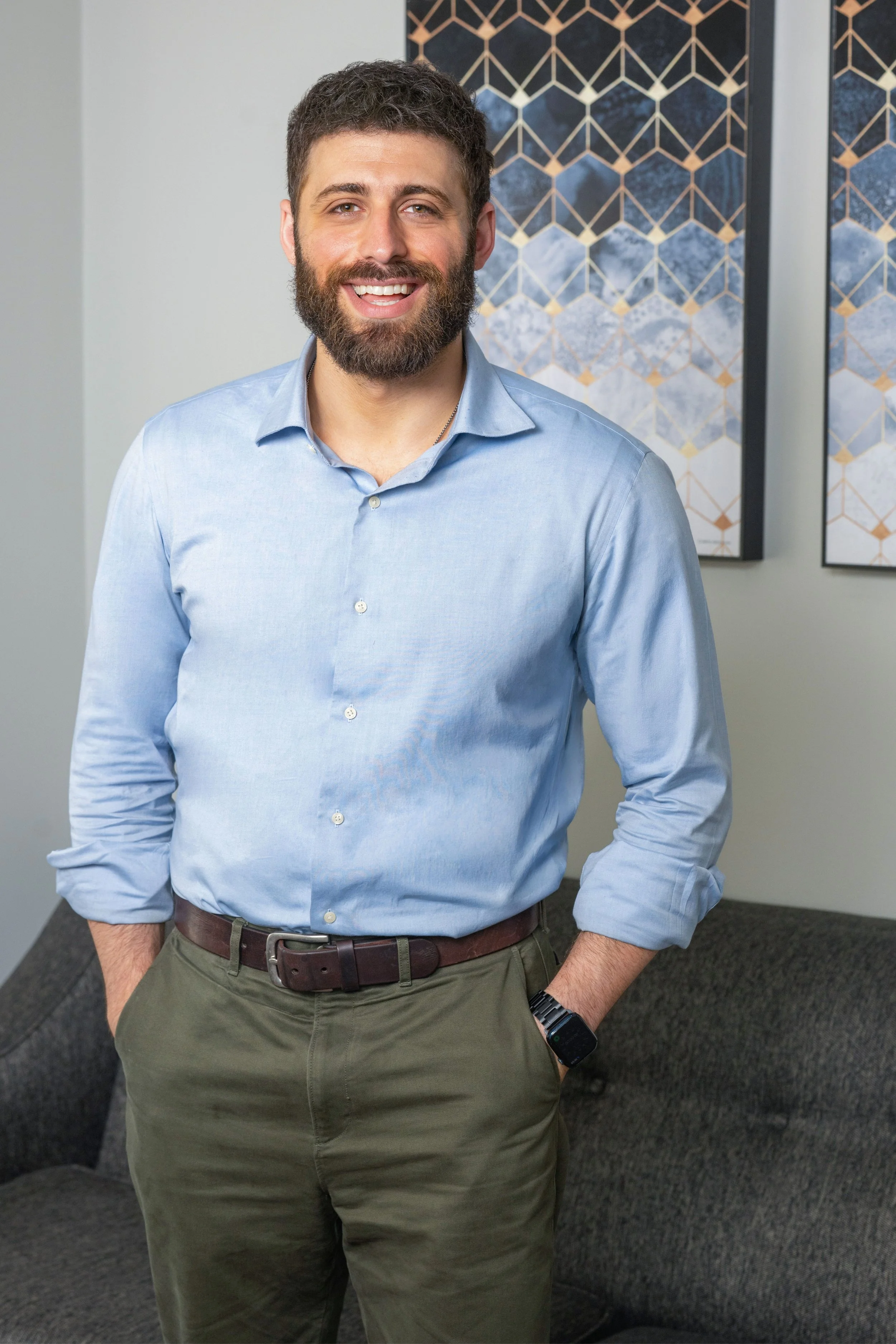
Max Levine
Max Levine
Psy.D., Postdoctoral Fellow | He/Him
I have provided psychotherapy in a wide variety of clinical settings, treating clients across a range of diagnoses and levels of acuity, from individuals searching for direction in their careers to those struggling to get out of bed after a psychiatric hospitalization—and everything in between. Across all of these contexts, I have been consistently moved and inspired by my clients' resilience, courage, introspective curiosity, and capacity for hope in the face of real suffering, conflict, and hardship. These experiences have left me with an abiding gratitude for the opportunity to accompany and support the people I work with, and an appreciation for the profound changes possible within a therapeutic relationship built on trust, empathy, collaboration, and compassion.

How I work:
My first priority is always the therapeutic relationship: a space where the client feels seen and heard. Regarding technique, I work from the empirically supported principle of responsiveness, grounded in the finding that positive therapy outcomes depend less on the use of any one particular modality than on the therapist's ability to adapt to each client's unique personality, culture, emotional experience, and clinical needs. With this in mind, I've worked to become competent across most major evidence-based approaches, so that I can blend them in unique ways to fit each client and adjust as the work unfolds. In general, I strive to combine depth-oriented work like psychodynamic therapy with more structured, skills-based approaches like cognitive behavioral therapy. This integration brings together the two essential ingredients of change: insight into the conscious and unconscious patterns, conflicts, and motivations driving a client's difficulties, and the concrete, actionable tools for addressing them.
Who I work with:
My doctoral training was generalist, giving me broad experience across most common psychological issues. My research expertise is in the treatment of depression, and I have specialized clinical training in adult ADHD and in post-hospitalization support, particularly for those struggling with suicidal thoughts and self-harm. I also have a special interest in men's mental health. I have experience working across the lifespan, from adolescents to older adults navigating aging, loss, and mortality.
More about me:
I found my way to psychology after a career in art, earning my Bachelor's in studio art from Wesleyan University before pursuing my Doctorate in clinical psychology at the Wright Institute in Berkeley, California. Outside my clinical work, I am passionate about psychotherapy training and education: I direct the psychodynamic program at Reflective Training, a UT Health–affiliated clinician training platform, and co-directed the psychodynamic psychotherapy course for psychiatry residents at the Long School of Medicine at UT Health San Antonio, where I developed and taught a new clinical skills curriculum, now used in their residency training, which I consult on. I'm also actively involved in psychotherapy research and am currently co-authoring a book with Dr. David Roberts, a clinical psychologist and researcher at UT Health, focused on outlining a novel integrative approach to therapy and therapist education. I am currently working under the supervision of Dr. Aimee Caramico.