
ADHD Disorganization in Relationships: When Messiness and Clutter Become Relationship Problems
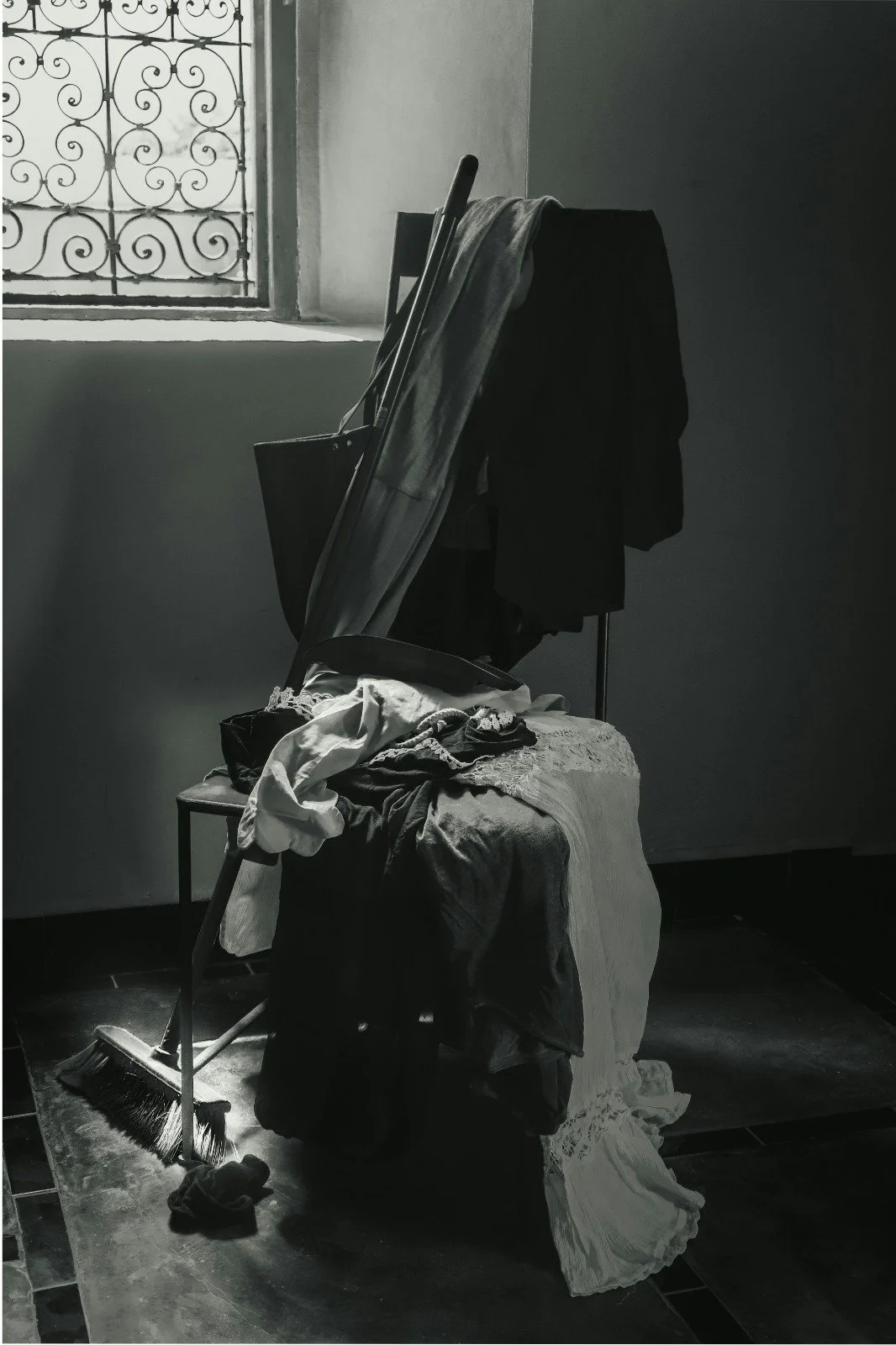
There is a chair in a lot of homes that isn't really a chair anymore. It's where the clothes go: not dirty enough for the hamper, not clean enough—or perhaps not worth the effort—to put back in the closet.
A sweatshirt lands there Monday. Jeans on Tuesday. A jacket gets added Wednesday. By the weekend, the chair has disappeared.
Then there is the kitchen counter. Mail, sunglasses, a water bottle, an unopened package, two receipts, a school form, something that needs to be returned, and something that absolutely cannot be lost—which may be exactly why it has been placed in the middle of everything else.
By the front door, there are shoes, a backpack, and an Amazon box. On the desk, six coffee cups and a document you've been looking for since Thursday.
None of this is necessarily a big deal when you live alone. When you live with someone else, though, mess can acquire meaning.
Your partner may not just see a sweatshirt on a chair. They may see evidence that they cleaned yesterday, have already asked several times, and are once again the person noticing what needs to be done.
Meanwhile, the person with ADHD may be looking at exactly the same pile thinking, I know. I'm going to deal with it.
And they may completely mean it.
That is how ADHD disorganization can become much more than an organizing problem. It can become a relationship problem.
The pile isn't really the problem
Arguments about an ADHD messy house may appear to be about clutter, but the emotional stakes are often much bigger.
Couples can find themselves arguing about who is responsible for the home, who notices what needs to be done, who has to remember, whose standards matter, and whether either person ever gets to fully relax.
Eventually, a more painful question can appear: Why does one person seem to care more than the other?
That interpretation can do real damage because disorganization is easy to mistake for indifference.
“If you cared about our home, you'd clean it.”
“If you respected me, you'd put your things away.”
“If you knew how stressed this makes me, you wouldn't keep doing it.”
The person with ADHD may hear those statements and think, But I do care.
That may be completely true. It may also be true that their partner is exhausted from stepping over the same shoes for the fifth time that week.
Both things can be true at once.
What does ADHD have to do with being disorganized?
Potentially, quite a bit.
ADHD isn't simply difficulty paying attention. Adults with ADHD may also struggle with organizing tasks, managing time, finishing things, remembering everyday responsibilities, and keeping track of belongings.
The National Institute of Mental Health includes difficulty organizing tasks and activities, losing things, forgetting chores and errands, and trouble following through among common ADHD difficulties.
Those executive-function challenges can show up in very ordinary ways. A jacket gets taken off but never reaches the closet. Mail comes inside but isn't sorted. Laundry gets washed but never folded. The dishwasher gets emptied halfway because something else suddenly requires attention.
You might start cleaning the bedroom, find an old cable that belongs in the office, walk into the office to put it away, notice an unpaid bill, open your laptop, see an email, and forty minutes later discover that the bedroom is still exactly where you left it.
There was effort. There was activity. What was missing was completion.
CHADD, a national ADHD organization, also notes that many adults with ADHD struggle with clutter at home and work and can feel overwhelmed or stuck when trying to organize. Better organizational strategies can improve not just day-to-day functioning but marriages, partnerships, and other close relationships.
None of this means that a messy house proves someone has ADHD. Plenty of people without ADHD are messy, and plenty of people with ADHD maintain very tidy homes.
The more useful question is whether disorganization is part of a persistent pattern—and whether that pattern is making daily life or relationships harder.
Is ADHD disorganization creating tension, resentment, or an uneven workload in your relationship? Max Levine has specialized training in adult ADHD and works with adults who want to better understand executive-function challenges, follow-through, avoidance, overwhelm, and the relationship strain these patterns can create. Learn more about working with Max.
What ADHD disorganization can look like at home
ADHD disorganization doesn't always look like catastrophic clutter. Often, it appears in completely ordinary places.
At the front door
Keys disappear. Shoes collect. Bags get dropped. Mail enters the house and never quite reaches wherever mail is supposed to go.
Then it's time to leave, and somebody can't find their keys.
A ten-minute search isn't necessarily a relationship problem. But if it is the fifth frantic search that week and everyone is now late again, a partner may stop experiencing it as an isolated inconvenience.
They begin experiencing it as a pattern.
On the kitchen counter
Counters are especially appealing because they're convenient. You walk through the door holding four things. Putting each object where it actually belongs requires four separate actions; putting everything on the counter requires one.
The counter wins.
The problem is that tomorrow brings another four things, and soon there are twenty.
For someone with ADHD, keeping objects visible can sometimes be functional. If the package that needs returning goes into a closet, it may effectively cease to exist.
For the other person, however, constantly seeing packages, papers, bottles, and miscellaneous objects can feel chaotic.
That creates a legitimate design problem: one partner may need things visible in order to remember them, while the other may need clear surfaces in order to feel calm.
Neither person is ridiculous. The home needs a system that accounts for both.
In the bedroom
This is where the famous chair often appears.
Clothing creates a surprisingly complicated organizing problem because each item requires a decision. Is it clean? Dirty? Wearable again? Does it need to be folded, hung, washed, or dry-cleaned?
If there is no obvious landing place for the category “I wore this for three hours and will probably wear it again,” the chair or floor can quietly become the default system.
Somewhere in the house is a box
Most homes have at least one miscellaneous box or drawer containing some combination of batteries, charging cables, gift cards, instruction manuals, loose screws, unidentified keys, and objects nobody wants to throw away because they might eventually turn out to be important.
For someone struggling significantly with ADHD disorganization, there may be several of these.
Often, they're less about laziness than postponed decisions: I'll figure out where this belongs later.
Unfortunately, later is where clutter tends to reproduce.
Why “just put it away” isn't always simple
“Just put it away” sounds like one action. Often it isn't.
Consider a stack of papers sitting on the dining room table. Properly putting them away might require you to identify each document, determine whether it matters, decide whether action is required, find or create the appropriate folder, remember where that folder lives, recycle what isn't needed, and respond to whatever actually requires a response.
That's a miniature administrative project disguised as a stack of paper.
This is one reason telling somebody with ADHD to “be more organized” often doesn't create much change. The instruction identifies the desired outcome without solving the process that keeps breaking down.
Max Levine, Psy.D. at North Star works with adults with ADHD, including the executive-function difficulties that can make apparently simple tasks much harder to consistently start and finish. His training combines insight-oriented therapy with practical, skills-based approaches.
That combination matters here. Understanding why the counter keeps filling up can be useful, but eventually you also need a counter that works.
If clutter, chores, forgotten tasks, or uneven follow-through are creating repeated tension, ADHD may be part of the pattern. Learn how adult ADHD therapy in Washington, DC can help with organization, routines, overwhelm, and relationship stress.
When one partner becomes the household manager
At first, having the more organized person pick up the slack can seem like the obvious solution.
They know where the scissors are. They remember the permission slip. They clear the counter, find the missing keys, put the return package beside the door, and remember that trash day is tomorrow.
For a while, it works.
The problem is that one partner can slowly become the household's external executive-function system.
CHADD describes a pattern that can develop in some ADHD-affected relationships in which one partner takes on more and more responsibility because doing things themselves seems easier. Over time, one person may feel overburdened while the other feels monitored, criticized, or treated more like a child than a partner.
You can often hear that transition in the language couples use.
“Could you put that away?” becomes “Why do I always have to ask you to put things away?” Eventually it can become, “I shouldn't have to tell you what needs to be done.”
By that point, the argument usually isn't really about the object anymore.
It's about mental load.
Why cleaning marathons don't solve the problem
Another common pattern is the giant clean-up.
The house becomes intolerably messy. Maybe guests are coming. Maybe you've lost one too many things. Maybe your partner is furious. Suddenly motivation arrives.
Music goes on. Garbage bags appear. Drawers come out. Three months of mail disappear from the dining room table. The refrigerator gets reorganized. At 1 a.m., the house looks fantastic.
You promise yourself you're going to keep it that way.
A week later, the counter has started filling again.
That doesn't necessarily mean the clean-up failed. It may simply have solved a different problem. It removed accumulated clutter, but it didn't create a system for Tuesday at 6:20 p.m., when you walk through the door carrying a laptop, coat, sunglasses, keys, and mail while thinking about dinner.
Maintenance happens in boring moments. That's where an organizational system has to work.
Make the organized choice easier than the disorganized one
This may be the most useful principle for ADHD organization: don't begin by trying to make your home prettier or more Pinterest-worthy.
Make the desired behavior easier.
If hanging your coat requires opening a closet, moving three hangers, and finding an empty one, while throwing the coat over a chair takes one second, the chair has a massive competitive advantage.
Add hooks.
If shoes always end up beside the door rather than in the bedroom closet, put shoe storage beside the door. If the mail always lands on the kitchen counter, don't create a beautiful mail center two rooms away. Put the system where the mail already goes.
Good organizational systems are often almost boringly simple.
Reduce the number of steps
Every additional step creates another place where a routine can break down.
Instead of storing something in a bin that requires opening a cabinet, pulling out the bin, removing the lid, replacing the lid, and returning the bin to the cabinet, an open basket may work better.
Instead of insisting that frequently used items disappear into hidden storage, give them a visible but contained home.
Instead of eight laundry categories, start with three.
You can make a system more sophisticated later. First, make it usable.
Stop organizing for your fantasy self
Your fantasy self may fold every T-shirt perfectly. Your actual self may not.
That's useful information.
Maybe T-shirts go into a drawer unfolded.
Your fantasy self may file every document as soon as it arrives. Your actual self may need a clearly labeled “action this week” tray.
Your fantasy family may carry everyone's shoes upstairs every evening. Your actual family takes them off at the front door.
Put the shoe rack at the front door.
An organizational system is successful when the people living in the house actually use it—not when it would look good in a photograph.
Decide what “clean enough” actually means
Couples frequently argue about mess without ever defining the standard they're trying to reach.
“Can you keep the kitchen clean?” sounds like a clear request, but what does clean mean?
Does it mean no dishes in the sink? Completely clear counters? Counters clear enough to prepare food? The dishwasher loaded before bed? Mail sorted once a week?
Two people can sincerely agree to “keep the kitchen clean” while imagining entirely different kitchens.
Specific agreements tend to work better. A nightly kitchen reset, for example, might mean:
dishes loaded
food put away
cooking surface clear
trash thrown out
one designated basket allowed at the end of the counter
That's measurable. “Stop being messy” isn't.
It may seem overly specific for two adults sharing a home, but if you're arguing about the same issue several times a week, specificity is probably worth it.
Give clutter boundaries instead of demanding its extinction
A completely clutter-free home may not be realistic, and it may not be necessary.
Containment can work better.
You might have one basket for items that need to go upstairs, one tray for papers requiring action, one bin for returns, and one shelf where hobby supplies are allowed to accumulate.
Maybe there is even one chair where re-wearable clothing is allowed—as long as the entire bedroom floor doesn't become an extension of it.
The goal changes from there must never be clutter to clutter has somewhere to stop.
For the partner who wants a calmer environment, shared spaces remain usable. For the partner with ADHD, everything doesn't have to disappear behind a cabinet door.
Try a ten-minute closing shift
Instead of relying on a giant Saturday cleaning marathon, try a short closing shift.
At roughly the same time each evening—or even three evenings a week—both people spend ten minutes putting obvious things back where they belong.
This isn't the time to reorganize the medicine cabinet or decide whether to keep your college notebooks. It's simply a reset: dishes, shoes, mail, clothes, trash, and whatever accumulated during the day.
Ten minutes is short enough that the task is less likely to feel psychologically enormous.
Doing it together can also help with another relationship problem: one person isn't silently cleaning the kitchen while becoming increasingly irritated that the other person is relaxing.
A modest system that actually happens is more useful than an ideal system that disappears after four days.
Assign ownership, not reminders
There is an important difference between helping with a task and owning a task.
Consider these two arrangements:
“Can you remind me to take out the trash?”
In that system, one partner is responsible for remembering. The other is responsible for carrying the trash outside.
Now compare it with:
“Trash and recycling are mine.”
In that arrangement, one person owns the whole responsibility: noticing, remembering, doing it, and handling what happens if it gets missed.
That distinction matters because the more organized partner can otherwise end up managing every household responsibility even if they aren't physically performing every chore.
CHADD's relationship guidance emphasizes collaborative agreements and accountability rather than leaving one partner to carry the entire mental load.
Ownership doesn't require splitting every responsibility exactly 50/50. Couples have different schedules, strengths, and preferences.
The goal is for the division of labor to feel deliberate rather than accidental.
Use visibility on purpose
People sometimes respond to ADHD clutter by trying to hide absolutely everything.
That can backfire.
If you routinely forget things once they're out of sight, visibility may need to be part of your organizational strategy. The useful distinction isn't necessarily visible versus hidden. It's visible versus scattered.
A clear tray labeled “RETURN” is visible. Three return packages in three different rooms are scattered.
A hook by the door is visible. Keys rotating between the kitchen counter, bedroom, jacket pocket, and backpack are scattered.
An open basket for exercise clothes is visible. A bedroom floor covered in clothing is scattered.
You may not need less visual information. You may need visual information with structure.
Make finding important things boring
Keys should not require detective work. Neither should wallets, glasses, headphones, medications, work badges, or chargers.
Choose one home for important objects—not three likely homes—and put that home where the item naturally leaves your hand.
If you consistently remove your keys in the kitchen, installing a beautiful key hook beside the front door simply because that's where keys “should” go may not work.
Watch what you actually do and design around it.
For inexpensive items that are frequently lost or moved, duplication may even be more practical than perfect organization. A charging cable at your desk and another beside the bed can work better than expecting yourself to move one cable back and forth all day.
The point isn't to become exquisitely organized.
It's to reduce avoidable friction.
If you're the cleaner partner
The experience of the more organized partner deserves just as much attention.
Living in persistent clutter can be genuinely stressful. Understanding the role ADHD may play in someone's disorganization does not require you to stop caring about your environment.
It is reasonable to want a usable kitchen counter, a bedroom floor you can walk across, important bills paid on time, essential documents not lost, and shared responsibility for maintaining the home.
The difficult distinction is between setting a boundary and becoming somebody else's manager.
A boundary might sound like: “I need our shared bedroom floor kept clear.”
Management sounds more like: “Don't forget your clothes. Did you put them away? What about those socks? Are you going to do it now?”
The first communicates what you need. The second makes you responsible for producing the result.
That distinction can become difficult when previous systems have repeatedly failed. But constantly monitoring another adult tends to create its own relationship problems.
If you're the messy partner
“I'm just messy” can easily become an identity. So can “I'm terrible at this,” “My brain doesn't work that way,” or “You knew I was messy when you met me.”
There may be some truth in those statements, but they don't give you much to work with.
Curiosity is usually more useful.
Where does clutter actually accumulate? What are you doing immediately before something gets dropped there? Which tasks repeatedly remain half-finished? Which objects are you always searching for?
Think about the organizational systems you've tried and abandoned. Were they too complicated? Too hidden? Too far away from where you actually use the object? Did they require too many decisions? Did you try to reorganize the entire house at once?
The more specific the problem becomes, the less it needs to become a judgment about your personality.
North Star's adult ADHD therapy in Washington, DC addresses disorganization, clutter, follow-through, procrastination, and the shame adults can carry when everyday responsibilities repeatedly feel harder than they “should.”
Max Levine, Psy.D. has specialized clinical training in adult ADHD and works with clients on both the practical challenges of ADHD and the emotional patterns that can develop around them.
That combination can matter when you already own plenty of baskets and calendars but somehow keep having the same arguments.
Shame is a terrible organizing system
People who are chronically disorganized often become extremely good at noticing evidence of their own disorganization.
The cluttered counter doesn't just look cluttered. It can become proof I'm failing again.
The laundry pile becomes Why can't I function like a normal adult?
A frustrated comment from a partner becomes They think I'm lazy.
That shame can make the task feel even larger, which leads to avoidance. The pile grows, the partner becomes more frustrated, and the person with ADHD feels even worse.
Some adults with ADHD do not need another person telling them that their house is messy. They know. They may have been thinking about it all day.
Accountability still matters, but accountability and shame are not the same thing.
Accountability says, “This system isn't working. We need to change it.”
Shame says, “This keeps happening because there's something wrong with you.”
Only one of those moves the problem toward a solution.
Sometimes the mess is telling you something
If clutter repeatedly causes conflict, it may be useful to ask something beyond How do we get rid of the clutter?
Ask what the clutter is revealing.
Maybe household responsibilities were never clearly divided. Maybe one partner has gradually become responsible for almost all of the invisible planning. Maybe the person with ADHD is trying to use organizational systems designed for somebody else's brain.
Maybe both people are exhausted. Maybe there are simply too many possessions for the available space. Maybe perfectionism makes starting difficult because “cleaning” has come to mean doing absolutely everything.
Or maybe one partner experiences visible clutter as mildly irritating while the other experiences it as deeply stressful.
Years of criticism can also make household conversations feel emotionally loaded before either person says much at all.
The objects matter, but the pattern around them may matter more.
When is it worth getting help?
You probably don't need therapy because there are dishes in the sink.
It may be worth considering help when disorganization has become a recurring source of shame, resentment, or conflict.
That might be happening if:
you have the same household argument over and over
one partner feels responsible for keeping the entire home running
the other partner feels constantly criticized
you repeatedly create organizational systems and abandon them
clutter makes parts of your home difficult to use
important bills, documents, appointments, or responsibilities are getting lost
you avoid inviting people over because you're embarrassed by the mess
one partner has started doing everything themselves because they no longer trust that the other person will follow through
arguments about clutter quickly turn into arguments about respect, responsibility, or whether somebody cares
At that point, this isn't only an organizing problem. It's affecting the relationship.
Therapy can help couples and individuals look at both sides of the issue: what practical system needs to change and what has happened emotionally between the people living inside that system.
A home doesn't need to be perfectly organized to feel good
There can be shoes by the door. There can be a junk drawer. There can even be The Chair.
The goal isn't to make your home look like a showroom. It's to create a space where both people can function without one person feeling perpetually overwhelmed and the other feeling perpetually judged.
Maybe the mail still lands on the counter, but now it lands in one tray.
Maybe clothes still go on the chair, but the chair gets cleared every Sunday evening.
Maybe you still lose your keys occasionally, but not every morning.
Maybe your partner still notices the mess before you do, but they no longer have to manage you through cleaning it.
Those changes aren't dramatic. Relationships are often improved by things that aren't dramatic: a hook, a basket, a ten-minute reset, a clear agreement, one less reminder, or one argument that doesn't happen.
If ADHD disorganization, clutter, or household responsibilities are creating recurring stress in your relationship, Max Levine, Psy.D. is accepting new clients at North Star Psychological Services.
Max has specialized clinical training in adult ADHD and works with adults who want both a better understanding of their patterns and practical ways to change them. North Star offers in-person ADHD therapy near Dupont Circle in Washington, DC, along with virtual options where available.
Learn more about working with Max Levine, Psy.D.
Frequently Asked Questions
Is disorganization a symptom of ADHD?
Difficulty organizing tasks and activities is one recognized feature of ADHD. Adults may also struggle with losing things, forgetting everyday responsibilities, managing time, and following tasks through to completion.
Disorganization alone does not mean someone has ADHD. Diagnosis depends on a broader and persistent pattern of symptoms that causes impairment in more than one area of life.
Why do people with ADHD have so much clutter?
There isn't one reason. Clutter can accumulate when someone has difficulty deciding where things belong, completing multi-step tasks, remembering items once they're out of sight, starting boring tasks, or consistently maintaining an organizational system.
CHADD notes that many adults with ADHD struggle with clutter and may feel overwhelmed when trying to organize their spaces.
Is a messy house a sign of ADHD?
Not by itself. Plenty of people without ADHD have messy homes, and many people with ADHD are highly organized.
A messy house becomes more relevant when it appears alongside a longstanding pattern of difficulties with attention, organization, time management, forgetfulness, or follow-through that interferes with everyday functioning.
Can ADHD clutter cause relationship problems?
It can. Disorganization can affect household responsibilities and increase the workload carried by a partner.
Over time, one partner may feel overburdened while the other feels criticized or controlled. ADHD relationship resources from CHADD describe this kind of imbalance as a common source of conflict for some couples.
How can I get organized when I have ADHD?
Start smaller than you think.
Instead of reorganizing your entire home, choose one recurring source of friction. Reduce the number of steps required to put frequently used items away, create obvious homes for things you regularly lose, use visible containers when helpful, agree on what “clean enough” means, and use short recurring reset periods rather than depending only on occasional cleaning marathons.
Should the more organized partner help?
Collaboration can be useful. Becoming responsible for constantly reminding, monitoring, and completing another person's responsibilities usually isn't a sustainable solution.
A better goal is to develop shared systems and clear ownership so that the more organized partner doesn't have to become the household manager.
Can therapy help with ADHD disorganization?
Therapy can help identify why organizational systems repeatedly break down, develop practical strategies around ADHD-related challenges, address avoidance and procrastination, and work through shame or relationship conflict that has developed around the pattern.
NIMH notes that behavioral and cognitive behavioral approaches can include practical work on organization, focus, and completing everyday tasks.
Related reading from North Star:
-
Adult ADHD Therapy in Washington, DC
For adults struggling with procrastination, time management, disorganization, clutter, executive dysfunction, emotional overwhelm, and ADHD-related relationship stress. -
CBT for Adult ADHD in Washington, DC
For adults who want practical support with task initiation, planning, time blindness, follow-through, procrastination, and daily systems that are easier to maintain. -
ADHD Executive Dysfunction in Relationships
For people trying to understand why forgetfulness, unfinished tasks, poor follow-through, and uneven household responsibilities can create conflict in close relationships. -
How to Find an Adult ADHD Therapist Near You
For adults looking for ADHD therapy and wondering what kind of therapist can help with organization, emotional overwhelm, procrastination, shame, and follow-through. -
Meet Max Levine, Psy.D.
Learn more about Max’s work with adults navigating ADHD, executive dysfunction, procrastination, disorganization, emotional overwhelm, and relationship challenges.