
Why Do I Keep Losing Things? ADHD, Stress, and Working Memory in Adults
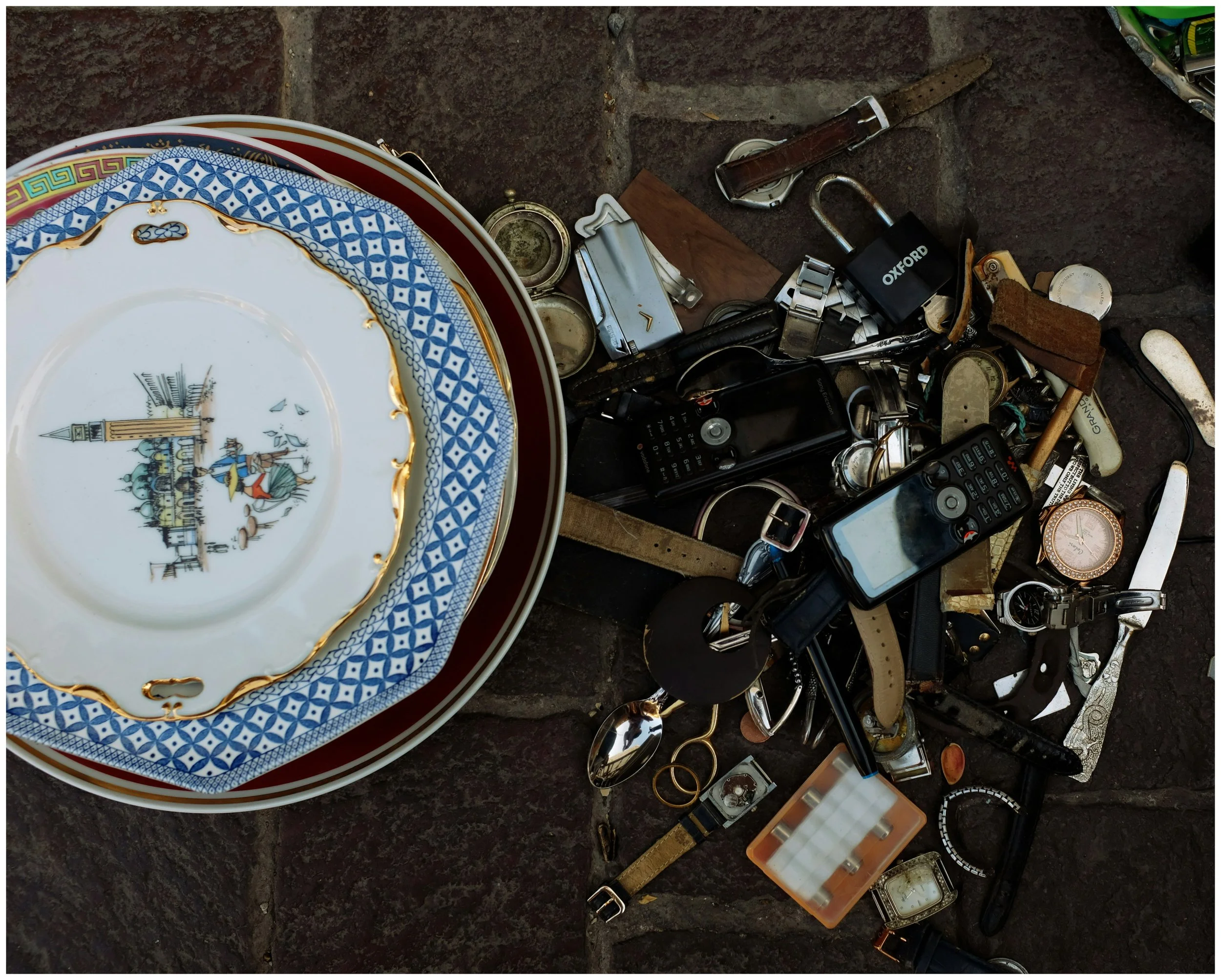
You know you had your keys when you came home. You used them to open the door.
Then you brought in a package, took off your coat, answered a text and went into the kitchen. Ten minutes later, you need the keys again and have absolutely no idea where they are. You look on the counter, check your coat, dig through your bag and eventually find them sitting beside the package you carried inside.
The strange part is not that you forgot where they were. It is that you barely remember putting them there.
If this happens once in a while, it is just annoying. If you are constantly losing your keys, phone, wallet, glasses, headphones or work badge, it can start to feel like something you should have figured out by now. You may wonder whether you are unusually forgetful, whether stress is making you scattered, or whether ADHD could explain why everyday objects seem to disappear around you.
Sometimes ADHD is part of the picture. A CDC survey of U.S. adults estimated that 15.5 million adults, about 6% of the adult population, had a current ADHD diagnosis in 2023. More than half of those adults had first been diagnosed after age 18.
But losing things is not an ADHD test. Plenty of people misplace things when they are rushing, distracted, sleeping badly, under unusual stress or simply trying to keep too much in their heads at once.
Often, the better question is not “Why can't I remember where I put things?”
It is “Did I really notice where I put them in the first place?”
Why do I keep losing things I just had?
Imagine a normal weekday morning. You are checking something on your phone while making coffee. You need both hands, so you put the phone down. At the same moment, someone asks you a question. You remember that you need to bring something upstairs, answer the question and walk out of the room.
A few minutes later, the phone is gone.
You probably have a decent memory of reading the message. You may remember exactly what you were thinking about. What you do not remember is the tiny, completely ordinary moment when your hand placed the phone on the counter.
That difference matters.
We tend to call the whole experience “forgetting,” but sometimes nothing meaningful was stored in the first place. Putting down the phone was background activity. Your attention had already moved to the conversation, the coffee, whatever you needed upstairs or the next thing on your mental list.
This helps explain why the same objects tend to disappear over and over. Keys, phones, wallets, glasses and headphones move with you all day. They are handled during transitions, and transitions are messy. You are opening doors, carrying bags, taking off a jacket, answering someone, checking an email or thinking about what needs to happen next.
The kitchen table has an easier life. It does not move.
Your keys can be in your pocket at 8:00, in your hand at 8:03 and sitting beside the toaster at 8:05 for reasons you will not be able to reconstruct at 8:20.
There is another version of this problem that is almost more frustrating: putting something “somewhere safe.”
You find an important document or spare key and deliberately choose an unusual location because you do not want to lose it. A few weeks later, you remember making the responsible decision. You remember thinking that this was a particularly good place.
You just cannot remember what the place was.
Consistency tends to work better than cleverness. A boring drawer you use fifty times is much easier to remember than a brilliant hiding place you used once.
Why can I handle complicated things but still lose my keys?
A lot of adults become particularly frustrated because losing things does not fit with the rest of how they see themselves.
You may manage a demanding job. You remember deadlines, conversations, project details and appointments. Maybe you work in government, law, consulting, healthcare, policy, technology or another field where keeping track of information is part of your day.
Then you come home and spend fifteen minutes looking for your wallet.
That does not necessarily mean your memory works well in one situation and terribly in another. The situations themselves are different.
Work tends to provide a lot of external structure. Meetings live on a calendar. Deadlines have dates. Documents have folders. Emails stay in your inbox until you deal with them. Other people are waiting for you to finish things. There are reminders everywhere, even if you do not think of them as reminders.
You may also have spent years building your own systems because you know what happens without them. You write things down. You set calendar alerts. You put important information somewhere you can retrieve it later.
Your sunglasses do not come with any of that.
Putting down your keys is also an extremely familiar action. You have done it thousands of times. Nothing about the moment tells your brain that this particular placement will matter twenty minutes from now.
So it is entirely possible to remember a detailed conversation from last week and have no memory of where you put your AirPods this morning.
For some adults, this gap becomes one reason they eventually explore ADHD. They notice that they function well when there is urgency, accountability or a clear system, but struggle much more when they have to create all of that structure themselves.
If that pattern sounds familiar, our page on adult ADHD therapy in Washington, DC goes further into how ADHD can show up outside the stereotype of someone who simply cannot focus. Max Levine, Psy.D. also works with adults who are trying to understand whether patterns involving attention, organization and follow-through fit into a broader ADHD picture.
When losing things may be part of a bigger ADHD pattern
Losing things becomes more meaningful when it fits a history.
Maybe you were the child who constantly misplaced school supplies, left sweatshirts behind or finished homework and forgot to put it in your backpack. Your room was always drifting back into chaos. Adults may have described you as bright but scattered, capable but inconsistent, or someone who needed constant reminders.
As you got older, you learned ways around some of it. You started putting every appointment in your phone. You became obsessive about deadlines because missing one felt terrible. You may have discovered that pressure was remarkably good at helping you focus.
Then adult life added more things to keep track of.
Bills, appointments, work deadlines, insurance forms, groceries, household repairs, school emails, travel plans, passwords, paperwork, relationships and dozens of other small responsibilities are all competing for attention.
Sometimes a system that worked well enough at 22 starts breaking down at 35 or 45 because there is simply more to manage.
That is why losing belongings is more useful as one clue than as a diagnosis. It matters more when it appears alongside a longstanding tendency to procrastinate, underestimate time, struggle to begin boring tasks, forget small obligations, leave projects unfinished or repeatedly create organization systems that do not last.
The history matters too. Someone who says, “I lost my homework, jackets and lunch boxes as a kid, and now I lose my keys and phone,” is describing something different from someone who says, “I have become much more forgetful over the last few months.”
If the broader ADHD pattern feels familiar, you can also read about ADHD executive dysfunction in relationships, especially if the problem extends beyond misplaced objects into planning, remembering and following through.
Sometimes you are simply overloaded
There are stretches of life when almost everyone becomes more scattered.
Maybe you are moving. Work has become unusually demanding. One of your kids needs more attention. A relationship is difficult. You are caring for a parent. You are sleeping badly. Or nothing particularly dramatic has happened, but there are fifteen unfinished things sitting in your head at the same time.
Those are the days when you go upstairs for a charger and come downstairs holding laundry instead.
You take off your glasses while thinking about a meeting and put them beside the toothpaste. You walk into a room and forget why you went there. You start replying to a message, notice something else that needs doing and forget about the message entirely.
When your attention is already crowded, ordinary actions are easier to perform without really noticing them.
The search itself can make things worse. You were already running late, and now you cannot find your keys. You start checking places quickly rather than carefully. You look in the same bag twice. You move objects around while searching and accidentally create several new places where things can disappear.
Then someone asks, “Where did you last have them?”
Perfectly sensible question.
Not always the question you want to hear at that exact moment.
If you notice that losing things gets substantially worse when you are overwhelmed, stressed or exhausted, that pattern is worth paying attention to. The missing objects may be one small sign that your attention is stretched thin.
If worry and tension are taking up a lot of your mental space, our page on anxiety therapy in Washington, DC may be helpful. If the bigger issue is feeling worn down and mentally depleted, you may recognize more of your experience in our page on burnout therapy.
Where working memory fits in
Working memory is a technical name for something very ordinary.
It is the little mental note that says, “The car is on level four,” or “The parking ticket is in my right pocket,” or “I put the keys beside the package because the package needs to go back outside.”
You are keeping that information available while you do something else.
Then life keeps happening.
Someone starts talking to you. Your phone buzzes. You remember an email you forgot to send. You see something else that needs your attention. The small piece of information about the keys now has competition.
This is why external systems can make such a difference. A key bowl does not improve your memory. It gives your memory less work.
Instead of trying to reconstruct where today's version of you happened to put the keys, you already know where they are supposed to be.
You may also have heard people talk about “ADHD object permanence,” particularly online. Usually they are describing the feeling that an object almost disappears from awareness once it is out of sight.
That experience is real, although the phrase is not quite literal. Adults with ADHD know that an object continues to exist when they cannot see it. The practical problem is that something hidden in a drawer may stop prompting your attention.
So people keep things visible.
The bill stays on the counter because otherwise you may forget it. The package you need to return sits beside the door. Papers stay on the desk. Medication stays next to the sink.
At first, this works well.
Eventually, every surface becomes a reminder.
When everything is asking for your attention, nothing stands out very clearly.
How to stop losing things so often
The temptation is to solve this by becoming more organized.
That can quickly turn into buying containers, reorganizing half the house and creating a complicated system that works beautifully for nine days.
Start smaller.
Think about the three or four things you lose most often. Those are the objects worth fixing first.
If your keys disappear constantly, decide where they live. One place. Not three reasonable places. Not “usually somewhere near the door.”
One place that is easy to use.
If you naturally empty your pockets when you come through the front door, put the key tray there. Do not put it across the room because that is where a perfectly organized person would supposedly keep keys.
The system has to work when you are tired, distracted, holding groceries and already thinking about dinner.
Do the same with your wallet, badge, glasses or headphones. You do not need to organize everything you own. You need fewer places to search for the things that repeatedly waste your time.
When something cannot have a permanent home, make the unusual location more noticeable. Say it out loud.
“Passport is in the top desk drawer.”
“Spare car key is in the front pocket of the backpack.”
It may feel slightly ridiculous. That is fine. The point is to interrupt autopilot long enough to notice what you are doing.
Technology can help too. Put a tracker on your keys. Use the location features on your phone. If one charger keeps traveling around the house and disappearing, consider leaving chargers in the places where you actually use them.
There is no special virtue in solving an irritating problem without tools.
Leaving the house is another moment where a tiny routine can save a lot of frustration. Phone, keys, wallet, badge, bag. Same order. Same quick check.
Keep it short enough that you will actually use it.
If the routine has eighteen steps, a laminated checklist and a color-coded chart, you may have accidentally created another task that requires executive functioning.
The most useful systems usually ask less of you, not more.
It also helps to notice the difference between intending to remember something and building a place for it.
“I will remember where I put this” is an intention.
“My keys always go on this hook” is a system.
“I need to remember to take this package back” is an intention.
“Returns stay beside the front door until they leave the house” is a system.
If you are constantly losing things, the goal may not be to train yourself to remember more. It may be to create fewer things that need to be remembered.
For some people, that sounds straightforward until they try to keep the system going. That is where therapy can become more useful than another organizing trick. Max Levine, Psy.D. works with adults with ADHD on the real-life places where attention, organization and follow-through keep breaking down, including the gap between knowing what would help and actually being able to do it consistently.
When losing things becomes somebody else's problem too
If you live with someone, your missing belongings may eventually involve them.
At first, your partner just happens to know where your wallet is.
Then it becomes normal to ask.
“Have you seen my keys?”
“Do you know where my headphones are?”
“Where did I put my glasses?”
Over time, one person can become the household search engine for the other person's things.
That can get tiring on both sides. The person who loses things may feel embarrassed or criticized. The other person may feel as though noticing, finding and remembering has quietly become part of their job.
And eventually, the disagreement is not really about the headphones.
The same dynamic can spread into appointments, bills, chores, school forms and groceries. Our article about ADHD disorganization in relationships looks more closely at how something that seems small can gradually turn into resentment.
There is also the way you talk to yourself.
“I lost my keys again” is frustrating.
“I am an adult who cannot even keep track of keys” is something else.
If you have spent years being described as messy, careless or irresponsible, ordinary mistakes can carry more emotional weight than they deserve.
A lost wallet does not need to become evidence about your character.
Sometimes the most useful question is simply: what happened today?
Maybe you came through a different door. Maybe the key tray was buried under mail. Maybe you were on the phone. Maybe the keys never really had one reliable home.
Those are ordinary problems.
Ordinary problems are usually easier to fix.
What if losing things is new?
There is an important difference between having always been the person who loses sunglasses and noticing that something about your memory has changed.
A lifelong pattern that gets worse when you are tired, rushed or overloaded may fit with attention and organization difficulties.
A sudden change deserves a closer look.
If you are losing things much more frequently than you used to, especially if that change appears with confusion, getting lost in familiar places, difficulty performing familiar tasks, significant language changes, neurological symptoms, behavior changes or symptoms following a head injury, talk with a healthcare professional rather than assuming ADHD or stress explains everything.
The timeline matters.
“I have always lost things” and “I started losing things this year” are different questions.
Adult ADHD therapy in Washington, DC
Sometimes you really do just need a hook beside the door.
But if losing things is one small piece of a much larger pattern, another organizer may only help so much.
Maybe you are also late more often than you want to be. Small administrative tasks sit untouched until they become urgent. Your desk, calendar or apartment repeatedly becomes organized and then slowly drifts back. You know exactly what needs to get done but still have trouble starting until the pressure becomes uncomfortable.
You may even appear highly organized from the outside because you have spent years building ways to compensate.
That can be exhausting.
At North Star Psychological Services near Dupont Circle, adult ADHD therapy in Washington, DC can address the practical difficulties that show up around attention, organization, procrastination, time management and follow-through, as well as the frustration that can build around them.
If you are looking for an individual therapist, Max Levine, Psy.D. works with adults with ADHD and can help clients make sense of these patterns while developing practical strategies that fit their actual routines rather than an idealized version of how they think they should function.
The point is not to become someone who never loses anything.
You will probably misplace your phone again. So will everyone else.
The difference is whether it stays a mildly annoying part of everyday life or becomes another frantic search, another late arrival, another argument and another reason to be hard on yourself.
If losing things is part of a larger pattern you have been trying to understand, you can schedule a free consultation.
Frequently Asked Questions
Why do I keep losing things I just had?
Often, you were focused on something else when you put the object down. The placement happened automatically, so there may not be a strong memory of it later. This is especially common when you are rushing, multitasking, talking to someone or moving between activities.
Is constantly losing things a sign of ADHD?
It can be part of ADHD, especially when it appears alongside a longstanding pattern of distractibility, procrastination, disorganization, lateness, poor time awareness or difficulty following through. Losing belongings by itself does not establish ADHD, and stress or overload can create similar problems.
Why do people with ADHD keep misplacing things?
Everyday objects are often lost during transitions, when attention is moving quickly between tasks. If belongings also do not have consistent homes, there may be several plausible places to search later. The problem can become much more noticeable when life requires a lot of self-management.
Why do I put something down and immediately forget where I put it?
The action may have happened almost automatically. You put the object down while your attention was focused on a conversation, another task or what you planned to do next. By the time you need the object again, there is not much of a memory of the placement to retrieve.
How can I stop losing my keys and phone?
Give frequently lost objects one predictable home and put that home where you naturally use or remove them. Keep the system very simple. Use trackers if they save you time. When you put something somewhere unusual, pause long enough to notice the location rather than assuming you will remember later.
Can stress make me lose things more often?
Yes. When your attention is already occupied by work, family responsibilities, anxiety, poor sleep or too many unfinished tasks, routine actions can happen more automatically. If you consistently become more scattered during demanding periods, that pattern is useful information.
When should I worry about frequently losing things?
Pay attention to whether this has always been part of your life or represents a real change. A sudden or rapidly worsening problem, especially if it comes with confusion, getting lost, difficulty with familiar tasks, language changes, neurological symptoms or a recent head injury, is worth discussing with a healthcare professional.
Related reading from North Star:
-
ADHD Executive Dysfunction in Relationships
Why forgetfulness, unfinished tasks, difficulty following through, and everyday executive-function problems can create frustration and uneven responsibilities between partners. -
ADHD Disorganization in Relationships
For adults who struggle with clutter, misplaced belongings, household systems that never seem to stick, and the relationship tension that can build around them. -
How to Find an Adult ADHD Therapist Near You
What to look for in an ADHD therapist if problems with attention, organization, procrastination, time management, or follow-through are affecting everyday life. -
Adult ADHD Therapy in Washington, DC
Learn how therapy can help adults with ADHD manage disorganization, losing things, procrastination, time blindness, emotional overwhelm, and executive-function challenges. -
CBT for Adult ADHD in Washington, DC
For adults who want practical help building routines and systems around planning, task initiation, organization, time management, and follow-through. -
Schedule a Free Consultation
If losing things is one part of a larger pattern involving attention, organization, procrastination, or follow-through, talk with us about what you have been noticing and whether therapy may be a good fit.